
Can you dock pay for lateness? Paying for time worked vs. fining
4 min read
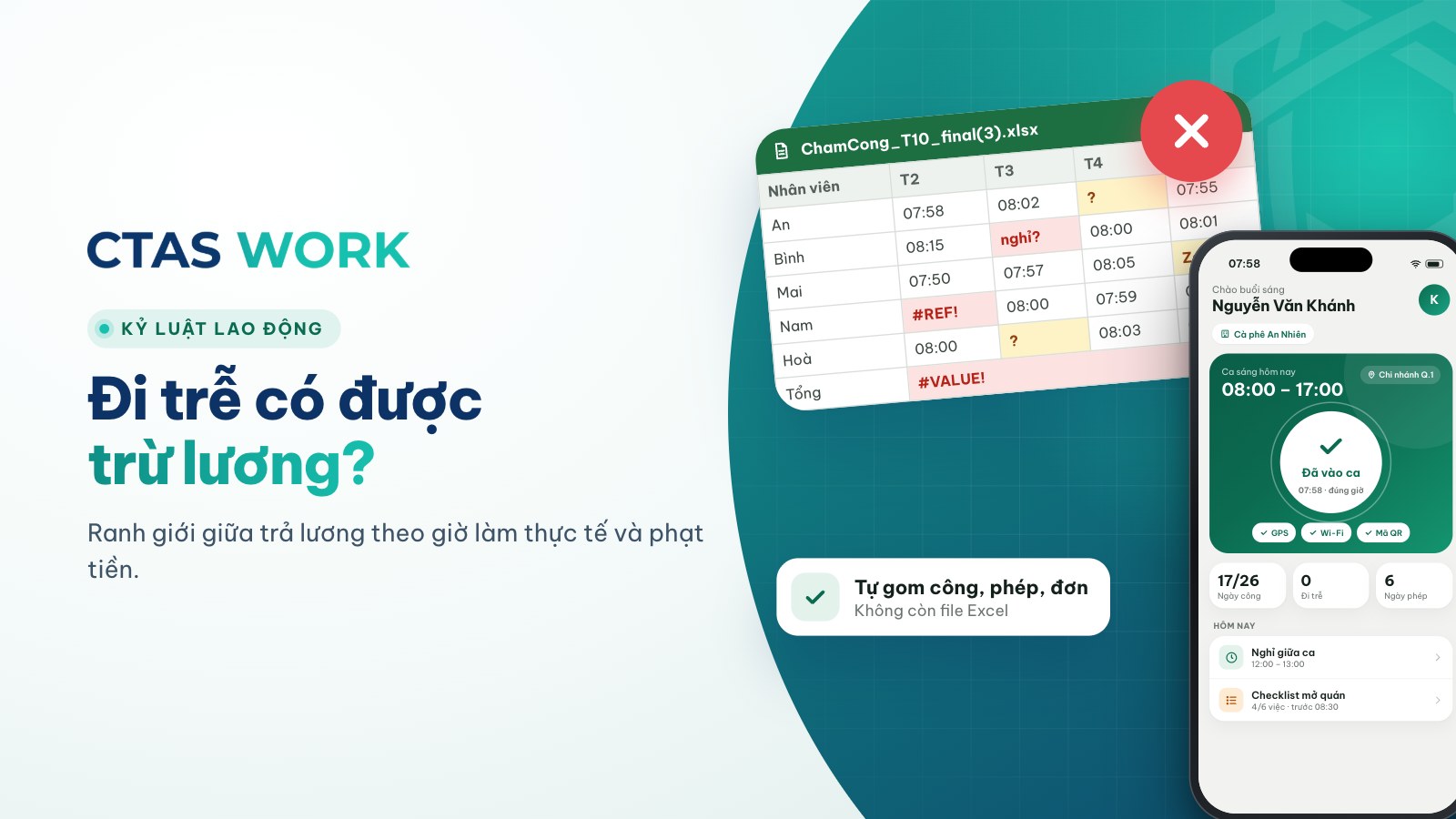
“Late 15 minutes, 50,000 VND deducted” — we have seen this sign in plenty of shops. It is simple, and it may be against the law. This article explains the line between not paying for time not worked and fining, and how to handle lateness properly.
The law bans fines and pay cuts as discipline
Article 127 of the 2019 Labour Code prohibits fines or pay cuts in place of labour discipline. A flat 50,000 VND per late arrival, unrelated to the time actually missed, is a fine.
Paying for time actually worked is different
If a contract pays by the hour and someone starts 15 minutes late, paying for the time actually worked is the common reading — you are not fining, just not paying for 15 minutes not worked. Write the rule into the contract or workplace rules and apply it to everyone.
- Pay 15 minutes less: paying for time worked.
- Deduct 50,000 VND (more than 15 minutes is worth): a fine.
- Lose a punctuality bonus: if the bonus rules set “no late arrivals” as a condition, not meeting it means no bonus.
When lateness becomes a discipline matter
Repeated lateness is handled with the forms in Article 124: reprimand, delayed pay rise for up to 6 months, demotion, dismissal — listed in the workplace rules and following due process. Unauthorised absence of 5 cumulative days within 30 days may justify dismissal (Article 125).
What about pay deductions?
Deductions (Article 102) are only for compensating damage to tools, equipment or property, capped at 30% of monthly net pay. They are not a lateness tool.
Managing lateness without fines
- Write the start time, grace period, pay rule and bonus conditions into the rules.
- Use objective clock-in data, not handwritten logs.
- Let staff request a late start in advance for good reasons.
- Look at trends, not single incidents.
How CTAS Work helps
In CTAS Work, start times are recorded when staff clock in on their phones at the shop. Staff can request a late start or early leave; once approved, it is not counted as a violation, and managers can waive individual cases. At month end you see how many times and minutes each person was late — enough for a fair punctuality bonus. Download CTAS Work.
For reference only, not legal advice.
Related articles
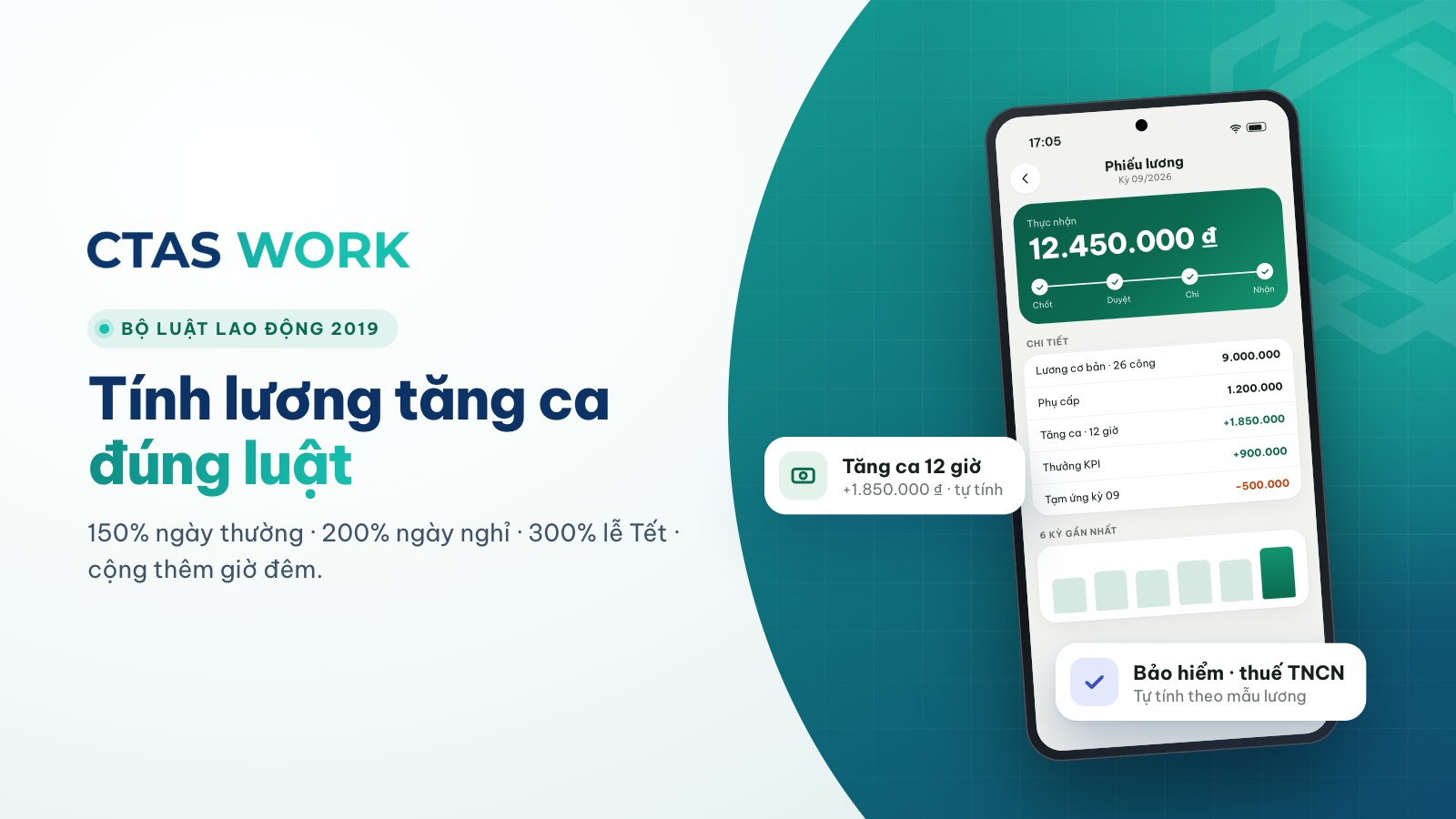
Overtime pay under Vietnam's 2019 Labour Code, with a worked example
150% on weekdays, 200% on days off, 300% on holidays, plus 30% and 20% at night — each rate explained and calculated for a barista.
4 min read
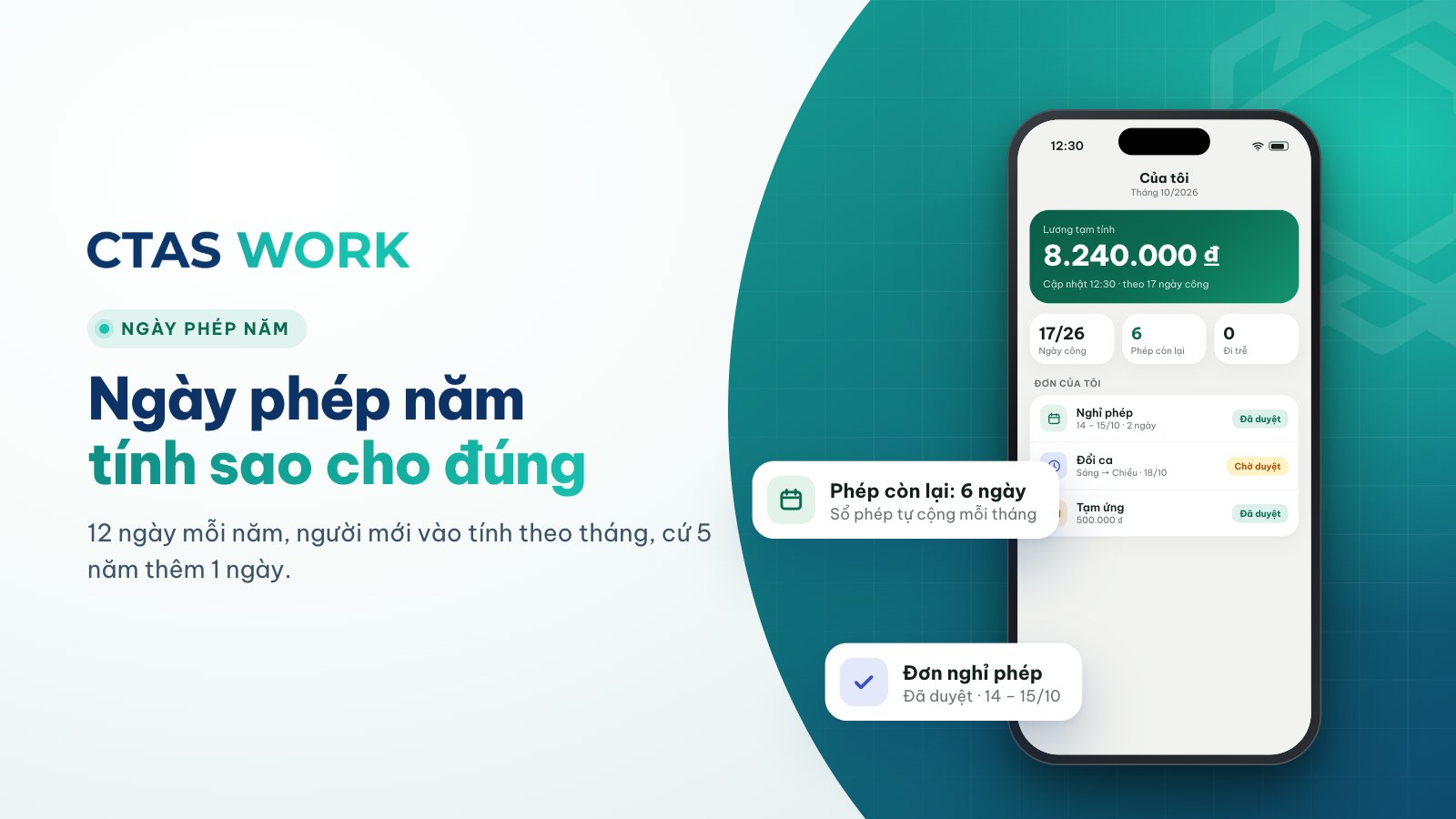
How to calculate annual leave: 12 days, part-year staff and seniority
Days per year, new starters, one extra day every 5 years, unused leave when someone leaves — plus three common shop situations.
4 min read
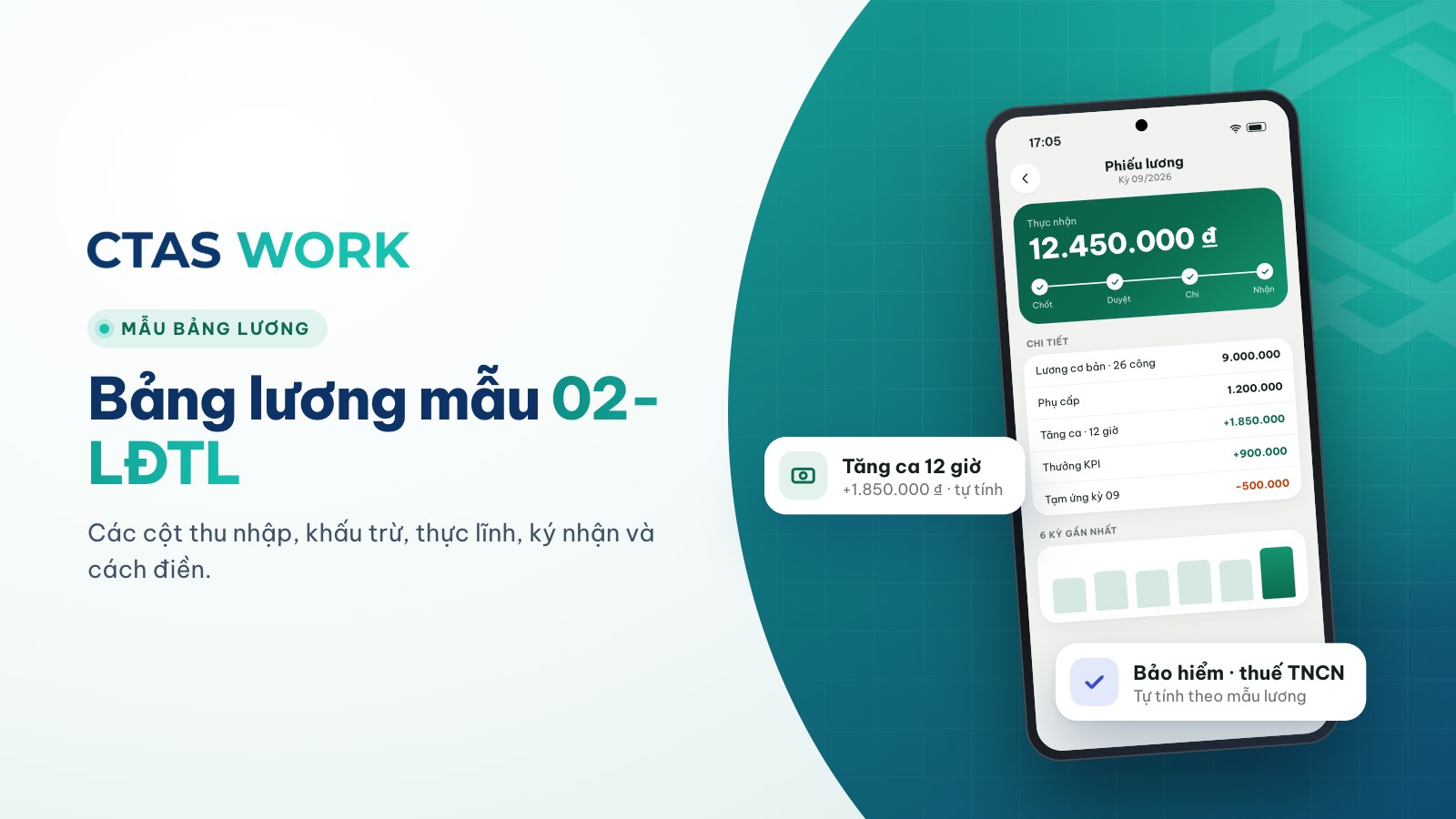
Payroll form 02-LĐTL: the columns and how to fill them in
What form 02-LĐTL is, its income, deduction, net pay and signature columns, and five mistakes that get payrolls sent back.
3 min read