
Payroll form 02-LĐTL: the columns and how to fill them in
3 min read
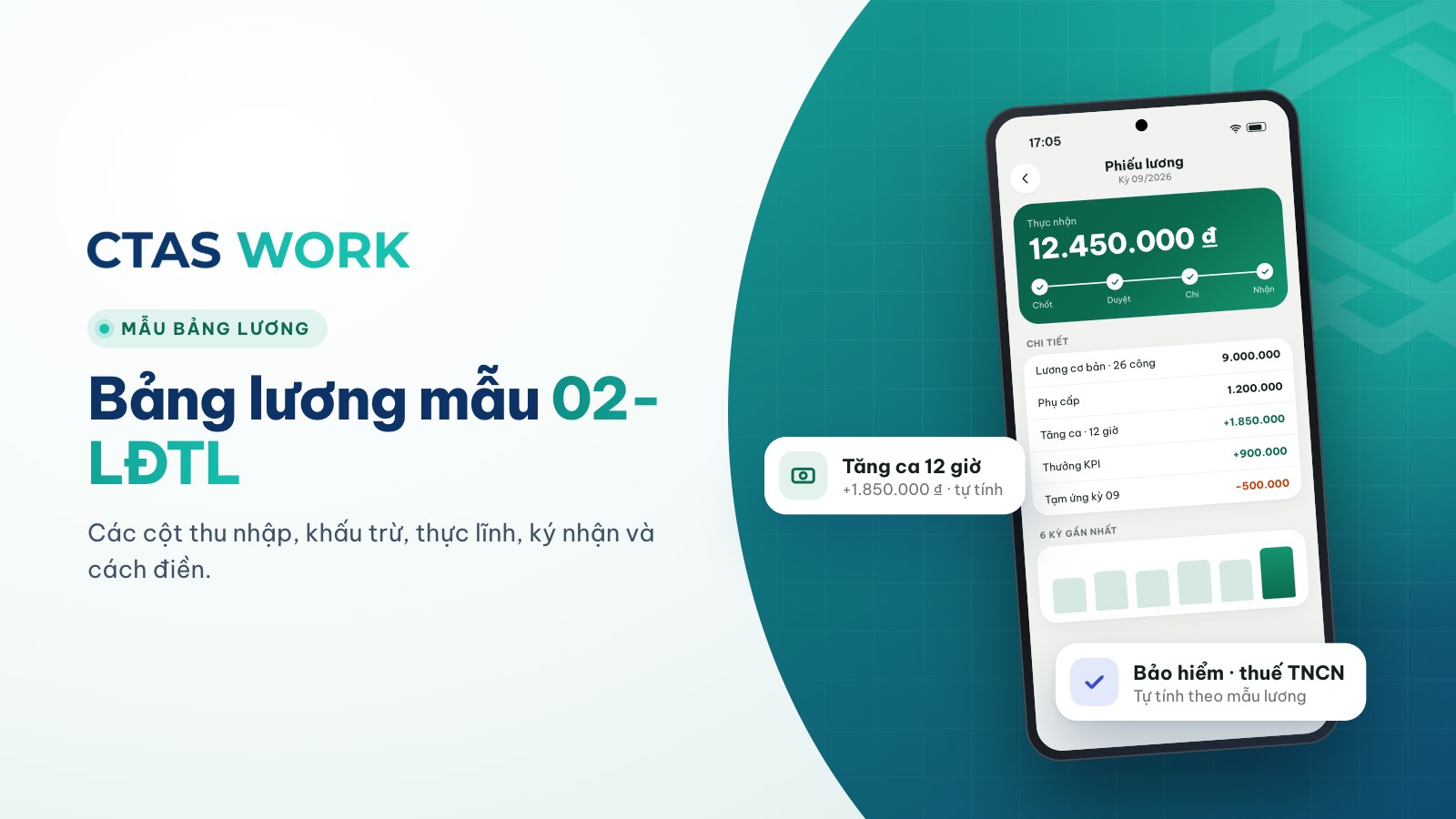
If an outsourced accountant keeps your books, you have probably been asked for “the payroll on form 02-LĐTL”. Here is what that form is, which columns it has, and the mistakes that get payrolls sent back.
What is form 02-LĐTL?
02-LĐTL is the payroll payment sheet in the Ministry of Finance’s accounting voucher system, best known to small and medium businesses through Circular 133/2016/TT-BTC. It usually comes with form 01a-LĐTL (timesheet). These labour and payroll forms are guidance: businesses may adapt columns as long as the voucher contains what the Accounting Law requires.
Typical columns
- Employee details: number, name, position, pay grade.
- Time-based pay: days worked, amount.
- Piece-rate pay, if any.
- Paid leave and holidays.
- Allowances.
- Overtime: hours and amount.
- Gross income.
- Advances already paid.
- Deductions: the employee’s social, health and unemployment insurance (currently 8%, 1.5% and 1%), personal income tax, other deductions.
- Net pay, and signature.
Filling it in correctly
- Take days worked from the closed timesheet.
- Separate taxable and non-taxable allowances.
- Calculate insurance on the insured salary, not gross income.
- Deduct advances in the right period.
- Collect all signatures or matching bank-transfer records.
Why payrolls get sent back
- Total net pay does not match the bank statement.
- Days on the payroll differ from the timesheet.
- Leavers still listed, or new starters missing.
- No signatures or payment records.
- Advances paid but not deducted.
Export 02-LĐTL straight from clock-in data
In CTAS Work, days, leave and advances already live in one place. When closing payroll, tap Export payroll to Excel for a 02-LĐTL file with days worked, income, insurance, tax, net pay and a signature column. Staff who spot an error can dispute their payslip in the app before you pay. Download CTAS Work.
For reference only. Insurance rates and tax rules may change; check current regulations.
Related articles
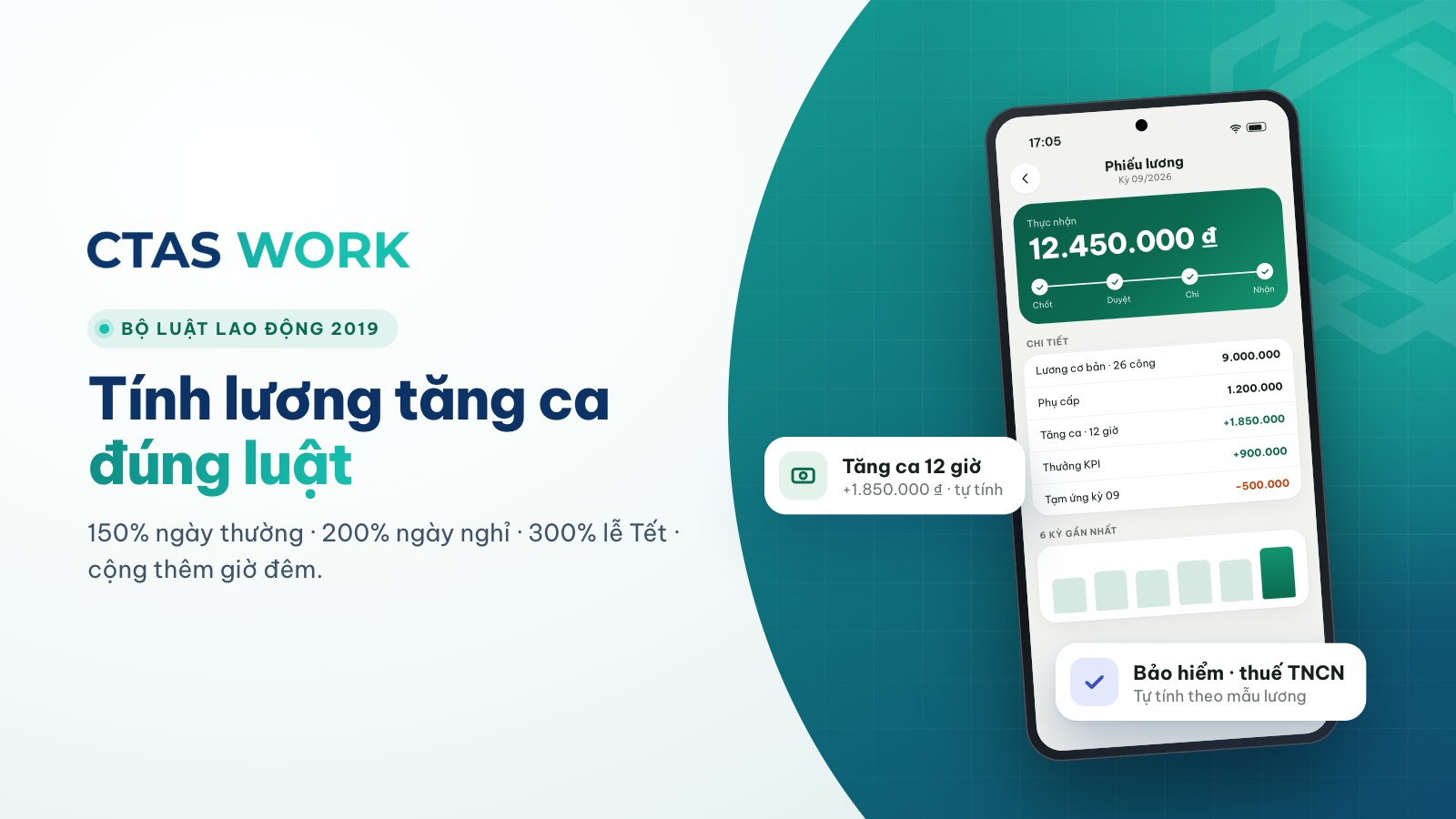
Overtime pay under Vietnam's 2019 Labour Code, with a worked example
150% on weekdays, 200% on days off, 300% on holidays, plus 30% and 20% at night — each rate explained and calculated for a barista.
4 min read
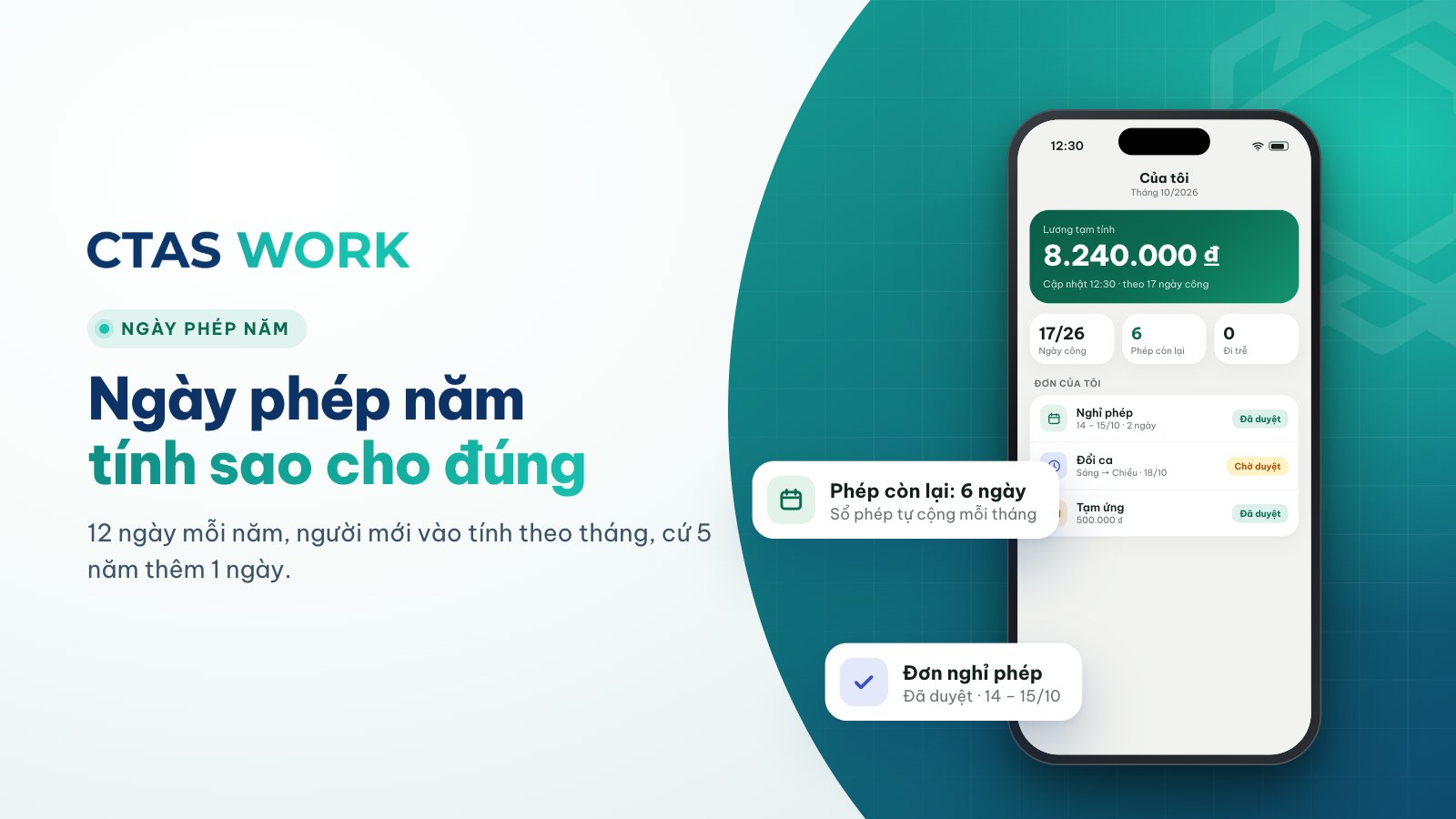
How to calculate annual leave: 12 days, part-year staff and seniority
Days per year, new starters, one extra day every 5 years, unused leave when someone leaves — plus three common shop situations.
4 min read
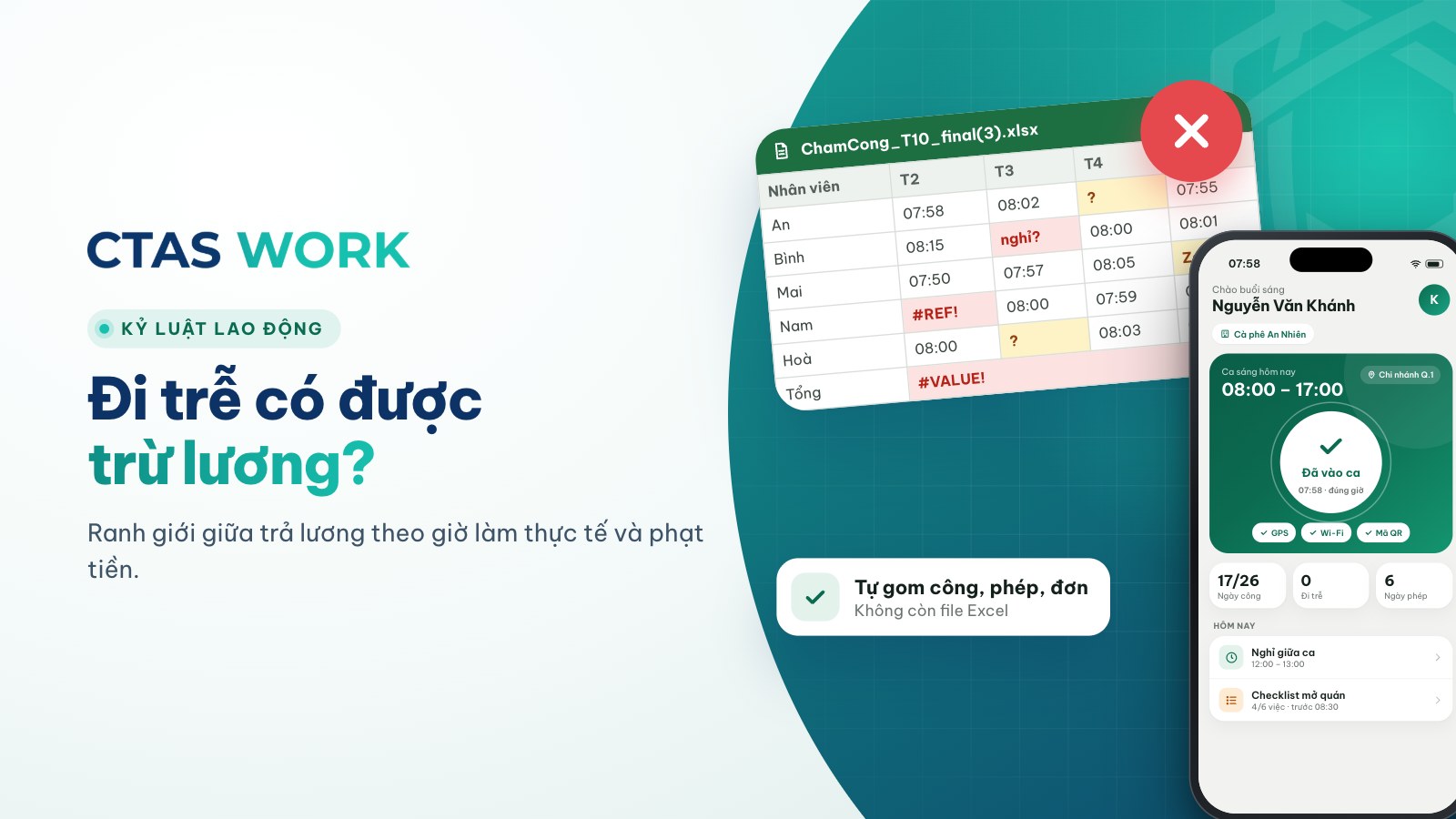
Can you dock pay for lateness? Paying for time worked vs. fining
The law bans fines and pay cuts as discipline. Is “15 minutes late, 50,000 VND off” wrong? How to handle lateness legally.
4 min read